

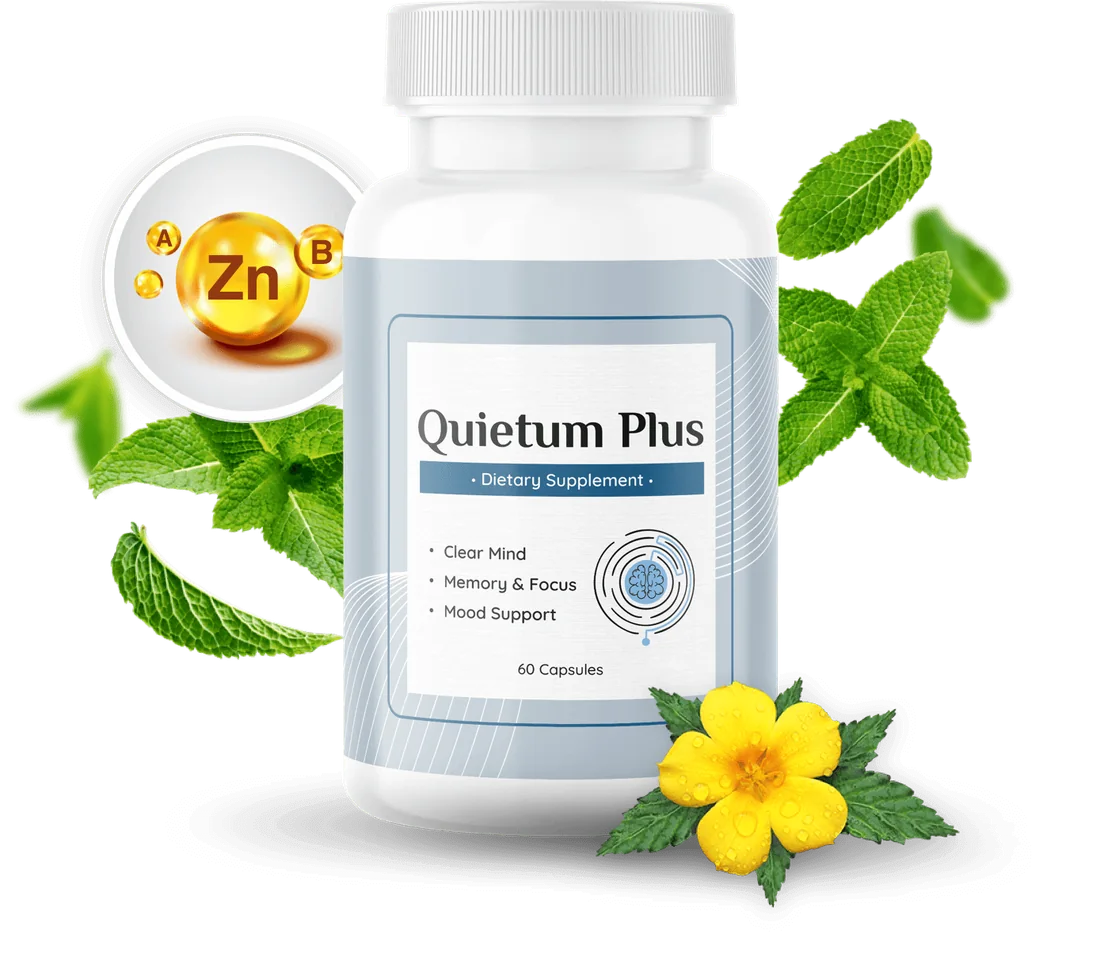
Quietum Plus is sold as a 60-capsule bottle with a two-capsule serving, so one bottle is a 30-day supply.
Quick verdict
Quietum Plus says its formula includes “18 special high-quality plant extracts.” The published Supplement Facts panel does not show 18. It lists an 802 mg proprietary blend of 12 botanicals, plus BioPerine, a black-pepper fruit extract. That is 13 plant-derived entries, not 18. The remaining nine entries are seven vitamins and minerals plus L-arginine and L-tyrosine. We could not reconstruct the 18 count from the current label. More importantly, the count is not evidence. The 12 botanicals share 802 mg with no individual doses, so a bigger number on the sales page does not tell you what you are actually getting.
Label and seller pages checked Oct 29, 2026 · No dollar prices are quoted in this guide · 60-day refund terms
Table of contents
- The short answer
- How we counted the label
- Where the 18 count may come from
- Why 12 botanicals in 802 mg matters
- What the 12 botanicals are studied for
- What the label does disclose
- Safety and interactions
- Use period and refund timing
- Who should skip it
- Frequently asked questions
- How we researched this
- References
The short answer
If you are asking whether Quietum Plus contains 18 extracts, the current label does not support that claim. It supports 12 named botanicals inside a proprietary blend, plus BioPerine. The label is the document that describes the product being sold. A sales-page count should be traceable to it.
Named botanicals inside the 802 mg proprietary blend.
Those 12 botanicals plus BioPerine, a black-pepper extract.
No matching 18-item list appears on the Supplement Facts panel.
The difference is not a rounding error. The marketing count is nearly 40% higher than the plant-derived count a buyer can actually verify. The page does not publish the missing six extracts, so the buyer cannot check their identity, dose or extract ratio.
How we counted the label
We counted only what the Supplement Facts panel names. We did not count “other ingredients,” and we did not assume that a marketing phrase refers to a hidden formula version.
| Label section | Entries | What it includes |
|---|---|---|
| Vitamins and minerals | 7 | Vitamin A, B1, B3, B6, B12, B5 and zinc |
| Other actives | 2 | L-arginine 100 mg and L-tyrosine 100 mg |
| BioPerine | 1 | Black-pepper fruit extract 500 mcg |
| Proprietary blend | 12 | Epimedium, Tribulus, Catuaba, Dong Quai, Damiana, ashwagandha, ginger, maca, muira puama, mucuna, asparagus and sarsaparilla |
| Total named entries | 22 | Seven nutrients, two amino acids, one pepper extract and 12 blend botanicals |
| Plant-derived entries | 13 | The 12 blend botanicals plus BioPerine |
The panel does not say “18 extracts” anywhere. It also does not give extract ratios for the 12 botanicals. Several are listed as plant parts—root, bark, leaf or aerial—rather than standardized extracts. That is a second transparency gap: even the 12 entries are not described in enough detail to compare them with a studied extract.
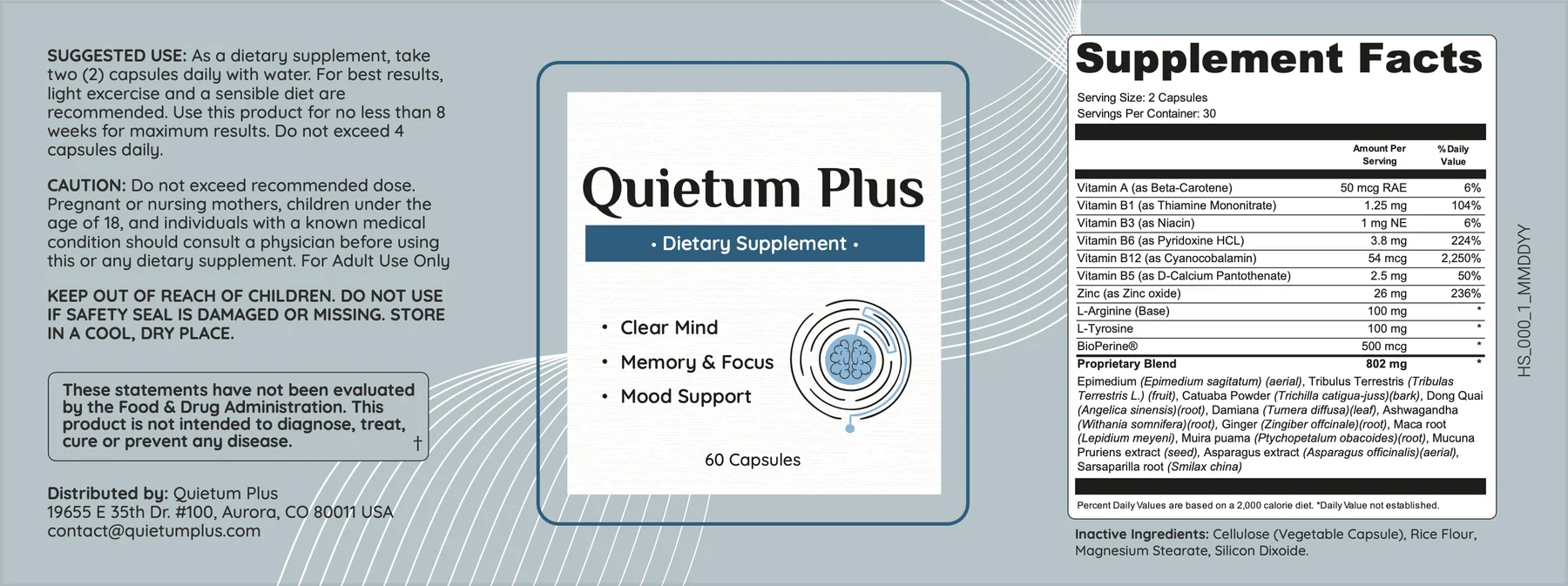
The published panel names 12 botanicals in the blend and BioPerine separately. It does not list 18 plant extracts.
Where the 18 count may come from
We cannot verify the origin of the number from the public materials we checked. There are a few possibilities, and none is documented:
- A different formula version. The seller may have changed the formula and left an old sentence on the sales page. If so, the page and the label describe different products.
- A different counting method. The page may count plant parts, nutrients or “botanical ingredients” in a way that is not explained. Without a list, the buyer cannot reproduce the number.
- A copy error. The number may simply be stale marketing copy. That is still a documentation problem on a page asking people to buy a supplement.
- Marketing inflation. A larger ingredient count sounds more comprehensive. It is not a dose, a trial result or a quality measure.
We are not going to invent a list to make the claim fit. The honest conclusion is that the current page and the current label do not reconcile. Ask the seller which formula version is shipping and for the matching label before you rely on either count.
Why 12 botanicals in 802 mg matters
The count is a distraction from the more important number: 802 mg. That is the total weight of all 12 botanicals in a two-capsule serving. The label does not say how much of each is present.
If the blend were divided equally, each botanical would get about 66.8 mg. It is almost certainly not divided equally. Some herbs may be present at 200 mg; others may be present at 5 mg. The label does not tell you which. That makes it impossible to compare the formula with published research doses, estimate the exposure to a specific herb, or judge interaction risk.
A proprietary blend is not automatically dishonest. Companies use them to protect a formula from copying. But the trade-off is that the buyer cannot audit the dose. For a product marketed for a medical symptom, that trade-off matters more, not less.
This is also why “18 vs 12” is the wrong question. If the product contained 18 botanicals in the same 802 mg, the average amount per botanical would be even smaller. More ingredients can mean more marketing surface area and more interaction risk, not more benefit.
What the 12 botanicals are studied for
The formula is often described as hearing support, but most of the blend is associated with other categories of research. That does not make the ingredients useless. It means the hearing claim is not carried by the label.
| Botanical | Common research or traditional use | Hearing evidence in this product |
|---|---|---|
| Epimedium aerial | Libido and bone-health research; traditional tonic | No product trial; no disclosed dose |
| Tribulus terrestris fruit | Libido and athletic-performance research | No product trial; no disclosed dose |
| Catuaba bark | Traditional mood and libido use | No product trial; no disclosed dose |
| Dong Quai root | Traditional circulatory and menstrual use; bleeding questions | No product trial; no disclosed dose |
| Damiana leaf | Traditional mood and libido use | No product trial; no disclosed dose |
| Ashwagandha root | Stress and sleep research; thyroid and liver questions | No product trial; no disclosed dose |
| Ginger root | Nausea and inflammation research | No product trial; no disclosed dose |
| Maca root | Libido and energy research | No product trial; no disclosed dose |
| Muira puama root | Traditional libido and mood use | No product trial; no disclosed dose |
| Mucuna pruriens seed | Levodopa precursor; Parkinson’s research | No product trial; no disclosed dose |
| Asparagus aerial | Traditional diuretic and general tonic use | No product trial; no disclosed dose |
| Sarsaparilla root | Traditional tonic and skin use | No product trial; no disclosed dose |
That table is the real answer to the count debate. Even if the page could justify 18, it would still have to justify the dose and the hearing mechanism. We found no clinical trial of the finished Quietum Plus formula and no evidence that this combination regenerates the auditory nerve or hair cells in humans.
What the label does disclose
The label is not opaque everywhere. It gives amounts for seven vitamins and minerals, two amino acids and BioPerine. The most notable are zinc 26 mg, vitamin B12 54 mcg and vitamin B6 3.8 mg. Those are real doses, not trace sprinkles.
They are also not a tinnitus treatment. Zinc has been studied in tinnitus with mixed, generally small results. B12 and B6 deficiency can cause neurological symptoms, and correcting a documented deficiency is sensible. But most people with tinnitus are not deficient, and the product does not require a test before use. The label’s nutrient base is the strongest part of the formula; it is still not evidence that the product quiets ears.
L-arginine and L-tyrosine are present at 100 mg each. Those are low doses compared with the amounts used in much of the research on blood flow or cognition. BioPerine is 500 mcg, an absorption-enhancer dose, not a hearing ingredient. None of these entries moves the 18-vs-12 count.
Safety and interactions
The hidden blend makes safety harder to assess, not easier. A buyer can see the total botanical weight but not the amount of any single herb. That matters for the ingredients with known questions:
- Ashwagandha can affect thyroid hormone levels and has been linked to rare liver injury.
- Dong Quai may increase bleeding risk and can interact with anticoagulants.
- BioPerine can increase absorption of some medicines and may alter drug metabolism.
- Zinc 26 mg is below the adult upper limit but can affect copper status with long-term use and can interfere with some antibiotics.
- Mucuna pruriens contains levodopa precursors, which matters for people with Parkinson’s disease or those taking related medicines.
- Epimedium, Tribulus and ginger may affect blood pressure or glucose in some people.
The sales page’s “all ages and medical conditions” language is too broad. The label itself warns pregnant or nursing women, children under 18 and people with medical conditions to consult a physician. Get urgent care for sudden hearing loss, one-sided tinnitus, pulsatile tinnitus, tinnitus with neurological symptoms, ear pain or discharge, or thoughts of self-harm. Those are not supplement questions.
Use period and refund timing
The label says to use the product for no less than eight weeks for maximum results. The sales FAQ says results may take around 9–12 weeks. The refund page describes a 60-day window from delivery and advises using the product for at least three months before deciding.
Those statements do not line up. If you follow the seller’s own advice, you may still be waiting for results when the refund window closes. The refund page requires the buyer to return all bottles, empty or not, and to pay return shipping. Confirm the start date, the return address and whether opened bottles are accepted in writing before ordering.
This guide does not quote dollar prices. The offer changes, and the number that matters is the total charged at checkout. Compare that total with the written refund terms, not with an old screenshot or a per-bottle headline.
Who should skip it
Skip Quietum Plus if you need a product with individually disclosed botanical doses. The 802 mg blend does not provide them, and the 18 count does not fix that. Skip it if you have sudden or one-sided hearing loss, pulsatile tinnitus, ear pain, discharge or neurological symptoms; those need urgent assessment. Skip it if you are pregnant or nursing, under 18, or taking warfarin, transplant medicine, seizure medicine or other narrow-therapeutic-index drugs without a pharmacist’s review.
If you have mild, stable tinnitus, have already had a hearing and medical assessment, and still want a nutrient-plus-herbal blend, treat the product as unproven and confirm the label version, package terms and refund policy first. The count is not a reason to buy it. The label is the reason to slow down.
Bottom line: The current Quietum Plus label shows 12 botanicals plus BioPerine, or 13 plant-derived entries. The sales page says 18. We could not reconcile the difference, and the hidden 802 mg blend means the count was never the most useful number anyway.
Frequently asked questions
Does Quietum Plus contain 18 plant extracts?
The current label does not show 18. It lists 12 botanicals in an 802 mg blend plus BioPerine, for 13 plant-derived entries. The other nine entries are seven vitamins and minerals plus L-arginine and L-tyrosine. We could not reconstruct 18 from the panel.
Where does the 18-extract claim come from?
The sales page says the formula includes “18 special high-quality plant extracts,” but it does not publish an 18-item list. The page may be counting differently or describing a different formula version. The label is the document that describes the product being sold.
Is 18 extracts better than 12?
No. A larger count does not prove a larger dose or a better product. The 12 botanicals share only 802 mg, and the label does not disclose how much of each is present. More ingredients can increase interaction risk without adding demonstrated benefit.
How much of each botanical is in Quietum Plus?
The label does not say. It gives an 802 mg total for the 12-botanical blend but no individual amounts and no extract ratios. That prevents a dose-by-dose comparison with research and makes the exposure to ashwagandha, Dong Quai, ginger and the other herbs impossible to judge.
Does the extract count affect whether Quietum Plus works?
The count does not establish efficacy. We found no published trial of the finished formula, and the 12 botanicals are studied mainly for mood, libido, inflammation, circulation or general antioxidant activity, not hearing. Tinnitus needs a medical and hearing assessment.
Is Quietum Plus 100% natural?
No. The label includes synthetic vitamins and minerals such as cyanocobalamin, pyridoxine HCl, thiamine mononitrate, niacin and zinc oxide. It also contains silicon dioxide. The natural badge is marketing, not a certification.
What should I do if the label count does not match?
Ask the seller to identify the exact formula version, publish the matching Supplement Facts panel and explain the 18 count in writing. If you already ordered, check the 60-day refund terms and save the offer page and receipt. Do not stop prescribed medicine without speaking to your clinician.
How we researched this
We read the published Supplement Facts panel line by line, counted the named entries, and compared that count with the current sales-page language. We checked the official text offer, FAQ, refund and contact pages and the seller reference list. We searched PubMed for Quietum Plus, reviewed NIDCD material on tinnitus and hearing loss, NCCIH material on the main botanicals, NIH Office of Dietary Supplements material on zinc and B vitamins, and FDA consumer guidance on dietary supplements.
We did not take Quietum Plus, commission a lab test, survey customers or treat testimonials as evidence. This analysis can identify a label-to-marketing mismatch and explain what the panel does and does not disclose. It cannot tell you that the product is safe for a particular person or that it treats a medical condition. This article is not medical advice.
References
- Quietum Plus — official text offer and 18-extract claim
- Quietum Plus — Supplement Facts label archived by Buyerlytic
- Quietum Plus — refund policy
- Quietum Plus — seller-cited reference list
- PubMed search — “Quietum Plus”
- PubMed search — zinc and tinnitus
- NIDCD — Tinnitus
- NIDCD — Hearing and balance
- NCCIH — Ashwagandha: usefulness and safety
- NIH ODS — Zinc fact sheet for health professionals
- NIH ODS — Vitamin B12 fact sheet for health professionals
- NIH ODS — Vitamin B6 fact sheet for health professionals
- FDA — Information for consumers on using dietary supplements